Facial Recognition vs Fingerprint Biometrics Guide
Compare facial recognition and fingerprint biometric systems for Ugandan businesses. Technical specs, costs, and deployment guidance for Kampala.

What to specify:
- Fingerprint systems — proven technology with FAR <0.001% for controlled environments.
- Facial recognition delivers <0.5 second contactless authentication — ideal for high-traffic corporate lobbies in Kampala.
- Multi-modal systems combining both technologies provide maximum security for organizations with demanding requirements.
Deploying corporate security systems requires balancing quick employee building access with reliable identity checking. In Uganda's rapidly modernizing business environment, the choice between fingerprint and facial recognition biometric systems has significant implications for security effectiveness, employee productivity, and long-term operational costs.
Biometric authentication leverages unique physical characteristics to verify identity, eliminating vulnerabilities associated with traditional keycards, PIN codes, and passwords. Unlike credentials that can be shared, lost, or stolen, biometric data is inherently tied to the individual.
Fingerprint Biometric Technology: Principles and Performance
How Fingerprint Recognition Works
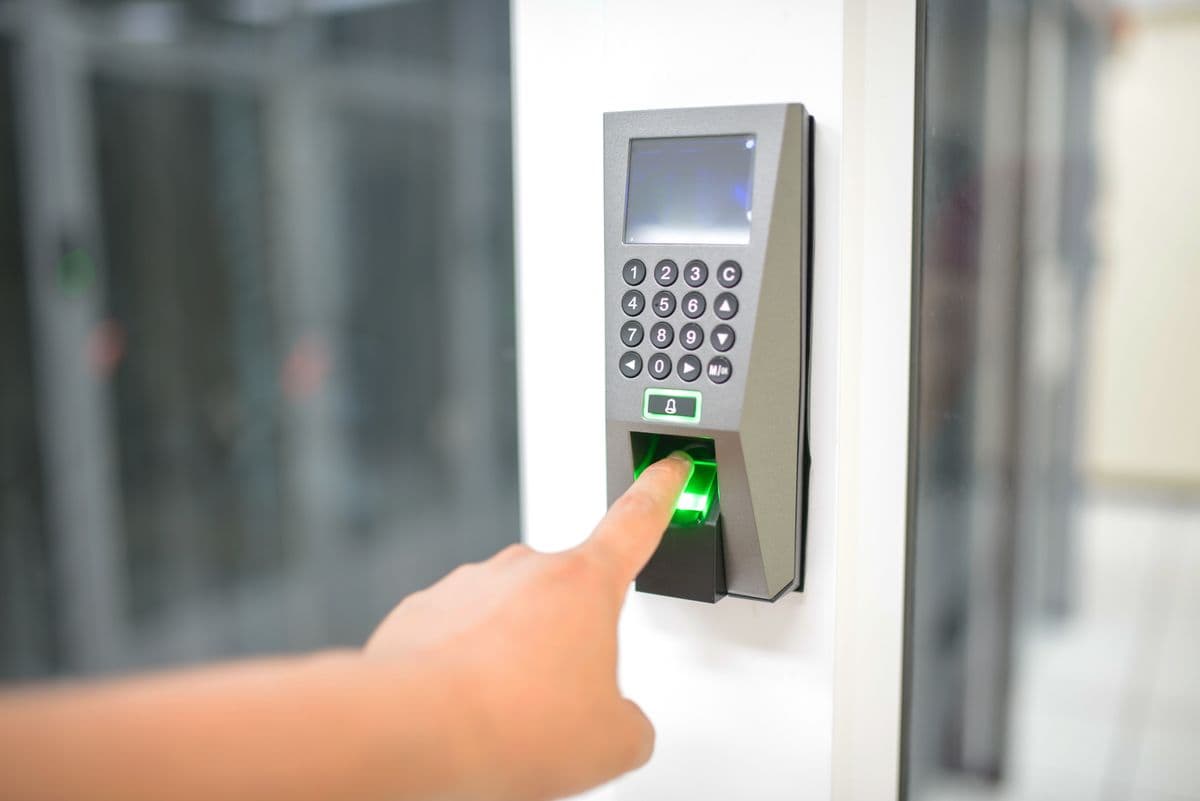
Fingerprint recognition analyzes the unique patterns of ridges, valleys, and minutiae points on a person's fingertip. Modern readers use capacitive, optical, or ultrasonic sensing to capture high-resolution images converted into digital templates.
Capacitive fingerprint sensors, the most common type in commercial systems, measure electrical capacitance variations across a fingertip surface:
- Hikvision DS-K1T502DBFW-C: FAR <0.001%, FRR <1%, 1-2 second authentication
- Dahua ASI32: Capacitive sensor, 3000-fingerprint capacity, IP65 rated
- Suprema BioMini Plus 2: FBI PIV certified, rugged design
Accuracy and Performance
Modern fingerprint systems achieve:
- False Acceptance Rate (FAR): <0.001%
- False Rejection Rate (FRR): <1%
- Authentication speed: 1-2 seconds
- User capacity: 3,000-10,000 fingerprints per reader
Practical Advantages
- Relatively fast authentication (1-2 seconds)
- Minimal user training required
- Small physical footprint at entry points
- Mature technology with established deployment methodologies
- Competitive pricing in Uganda's market
Limitations in Uganda's Environment
- Dust, moisture, and skin conditions affect reading accuracy
- Physical laborers and healthcare workers may experience higher rejection rates
- Outdoor environments require additional protection
- Regular cleaning required to maintain performance
- High-traffic use can wear down scanner surfaces or accumulate smudges that cause misreads
Facial Recognition Technology: Capabilities and Considerations
How Facial Recognition Works
Facial recognition analyzes unique facial features including nose geometry, eye spacing, jawline, and other landmarks. Modern systems employ advanced algorithms and 3D sensing for high accuracy.
3D facial recognition systems capture depth information alongside 2D images:
- Dahua ASI32: 3D structured light, anti-spoofing, <0.5 second verification
- Hikvision DS-K1T607MFW: 7-inch touch screen, 2MP camera, multi-distance recognition
- Resists spoofing with photographs or masks
Accuracy and Performance
- Authentication speed: <0.5 seconds
- Throughput: 20-30 users per minute
- Contactless operation: No physical contact required
- Liveness detection: Prevents photo/mask spoofing
Advantages for Ugandan Businesses
- Rapid authentication for high-traffic environments
- Contactless nature eliminates cross-contamination concerns
- Passive verification — users simply approach the reader
- No maintenance of sensor surfaces required
- Hygienic solution valued in post-pandemic environment
Considerations
- Higher initial cost than fingerprint systems
- Privacy concerns require careful policy development
- Lighting conditions affect recognition accuracy
- Face coverings may impede verification
Comparative Analysis: Cost, Security, and Usability
Cost Considerations
Over a 5-year period, facial recognition systems often demonstrate comparable or lower TCO when considering reduced maintenance (no sensor cleaning/replacement), higher throughput (faster authentication), and improved user experience (contactless operation).
Security Capabilities
| Capability | Fingerprint | Facial Recognition |
|---|---|---|
| Access control | Yes | Yes |
| Identity verification | Strong | Strong |
| Contactless | No | Yes |
| Anti-spoofing | Moderate | High (3D) |
| Throughput | 10-15/min | 20-30/min |
User Experience
| Factor | Fingerprint | Facial Recognition |
|---|---|---|
| Physical contact required | Yes | No |
| Learning curve | Moderate | Minimal |
| Hygiene concerns | Yes | None |
| User acceptance | Good | Excellent |
| Speed | 1-2 seconds | <0.5 seconds |
Environmental Resilience
- Fingerprint sensors affected by dust, moisture, and skin conditions
- Facial recognition affected by lighting conditions and obstructions
- For Uganda's tropical climate, both require appropriate environmental considerations
Accessibility Considerations
- Fingerprint systems may present challenges for users with certain skin conditions or physical limitations
- Facial recognition may be affected by certain disabilities or face coverings
- Technology selection should accommodate Uganda's diverse workforce
Implementation Best Practices for Ugandan Businesses
Site Assessment
Critical first step — evaluate:
- Lighting conditions at proposed reader locations
- Dust levels and humidity exposure
- Traffic patterns and user flow characteristics
- Temperature and humidity for Uganda's tropical climate
User Enrollment
Enrolling employees under controlled conditions:
- Clean, dry fingers for fingerprint
- Proper lighting for facial recognition
- Accommodate users with various physical characteristics
- Minimize disruption during enrollment process
Integration Planning
Plan early for integration with:
- Access control panels and door controllers
- HR software and payroll systems
- Network infrastructure for data transmission
- Video surveillance for enhanced security
Pilot Deployment
Conduct pilot deployments in representative areas before full-scale implementation:
- Validate system performance
- Identify integration issues
- Gather user feedback
- Reduce implementation risk
Training and Change Management
- Proper usage techniques for all users
- System capabilities and limitations
- Privacy protections and data handling
- Rationale behind biometric authentication
Common Mistakes and Risk Mitigation
Underestimating Environmental Challenges
Installing readers in locations exposed to direct sunlight, heavy dust, or high humidity leads to performance issues. Careful site selection and environmental protection prevents problems.
Neglecting User Training
Users who don't understand proper techniques experience repeated rejections, leading to frustration and workarounds. Comprehensive training addresses issues before they affect operations.
Inadequate Growth Planning
Selecting systems with limited enrollment capacity creates bottlenecks as organizations grow. Scalable designs accommodate Uganda's business growth patterns.
Overlooking Privacy Requirements
Uganda's evolving data protection landscape requires appropriate safeguards for biometric data. Consulting with legal experts and implementing robust measures mitigates risks.
Future Trends and Technology Evolution
Multi-Modal Systems
Combining fingerprint, facial recognition, and other modalities provides highest security levels while improving availability through alternative authentication methods. These systems are becoming more accessible and affordable.
AI-Enhanced Recognition
Artificial intelligence improves accuracy and reduces environmental impact:
- Compensates for dirty fingers
- Handles poor lighting conditions
- Adapts to appearance changes
Contactless Technologies
Palm vein recognition, iris scanning, and advanced facial recognition offer touchless alternatives that may become preferred options in commercial environments.
Mobile Biometrics
Integration with smartphone biometrics enables mobile-based access control, eliminating dedicated reader hardware. As smartphone penetration increases in Uganda, mobile biometrics may become preferred.
Privacy-Preserving Technologies
Emerging technologies verify biometric characteristics without storing raw biometric data, addressing privacy concerns while maintaining security.
Conclusion and Selection Guidance
Choose Fingerprint If:
- Cost-sensitive deployment in controlled indoor environments
- Moderate traffic volume
- Budget constraints limit initial investment
- Existing staff familiar with fingerprint technology
Choose Facial Recognition If:
- High-traffic areas requiring rapid throughput
- Contactless operation is important
- Hygiene concerns require touchless authentication
- Budget allows higher initial investment for lower long-term costs
Choose Both If:
- Maximum security is required
- Different zones have different security needs
- Budget allows for layered security
- Future-proofing is a priority
Backspace Business Solutions specializes in biometric access control system design and implementation. Our certified technicians offer both fingerprint and facial recognition solutions tailored to Uganda's specific requirements.
Request a Free Site Survey to discuss your biometric access control requirements and discover how we can enhance your organization's security posture.
Frequently Asked Questions
What biometric technologies are available for access control?▼
How accurate are biometric access control systems?▼
Can biometric access control integrate with existing security systems?▼
What happens if a biometric reader fails?▼
Are biometric systems compliant with privacy regulations?▼
Continue reading
More articles in Biometric Access Control →