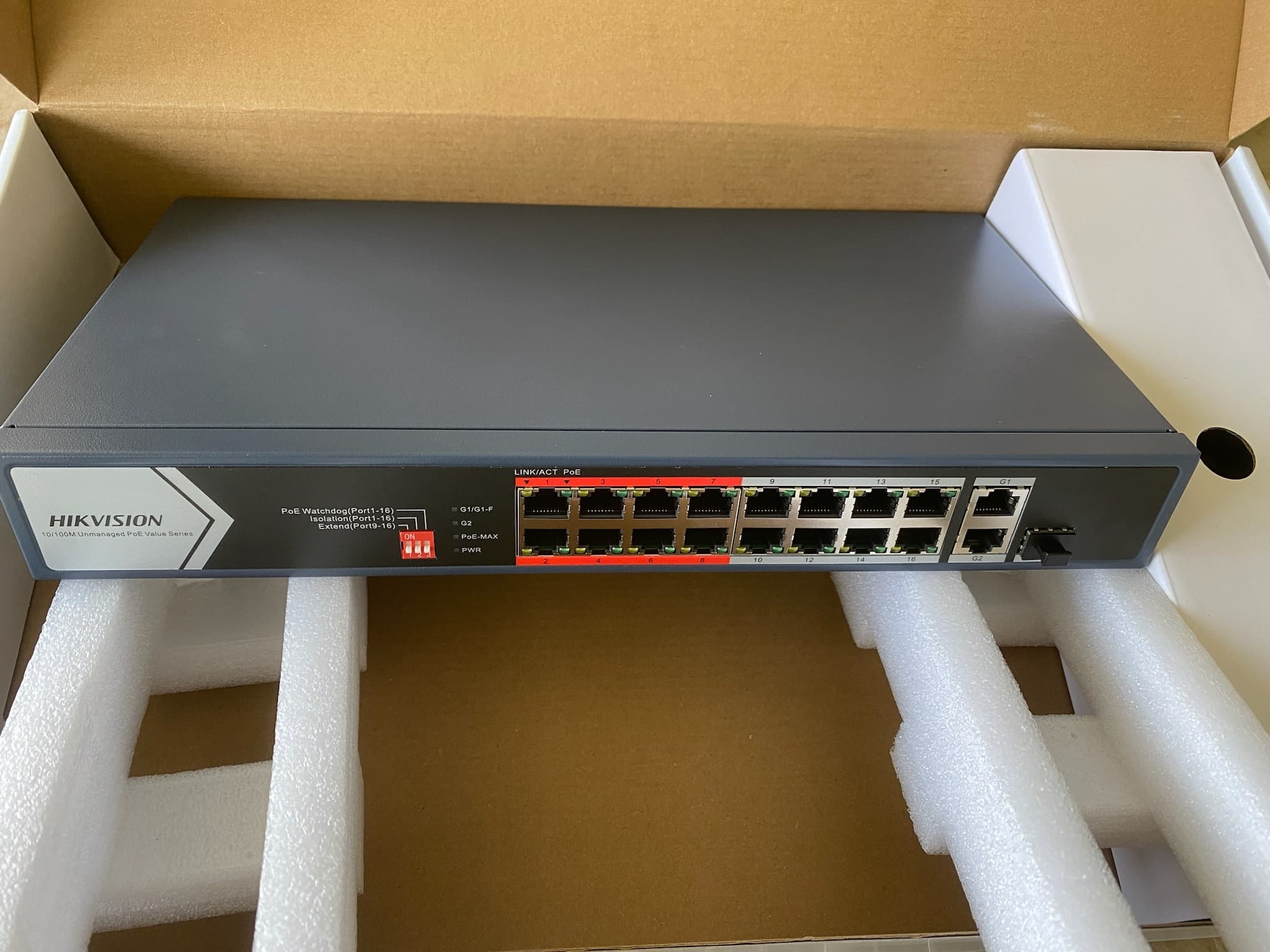
Warehouse Fiber Backbone & Network Rack Build
Client: Logistics & warehousing company
Server room build-out, single-mode fiber backbone, and structured cabling deployment for a logistics warehouse — connecting 3 zones and 48 workstations with dedicated, climate-controlled infrastructure.
Project
Design and construction of a dedicated server room, single-mode fiber backbone, and structured cabling deployment for a logistics warehouse with three operational zones.
Client Environment
A logistics and warehousing facility with three distinct operational zones covering a large floor area. The facility handles inventory receiving, storage, and dispatch operations. Workers use handheld inventory scanners and workstations for manifest and shipping tasks.
The Challenge
What We Walked Into
The warehouse floor had no network connectivity. Inventory scanners relied on mobile hotspots carried by individual workers — connectivity was inconsistent, and data sync to the central inventory system was unreliable and delayed. Workstations in the dispatch area had no wired connectivity, with some staff tethering to personal phones for internet access. The server room did not exist — networking equipment was stored in a locked office closet alongside filing cabinets, with no environmental control and no structured cabling. The closet had no ventilation, and equipment temperatures regularly exceeded safe operating limits during business hours.
Existing Environment
What Was Already In Place
A converted office closet approximately 2m x 2m used as a makeshift server room, containing a consumer-grade router, a small unmanaged switch, and a single UPS unit. No structured cabling — a few temporary Cat5 cable runs were tacked along walls and door frames. No fiber infrastructure. Workers used personal mobile hotspots for inventory scanner connectivity. Four workstations in the dispatch area connected via WiFi to the consumer-grade router, with frequent disconnections.
Assessment
What We Discovered
A site survey identified that the warehouse floor area exceeded 100m from the makeshift server room to the farthest operational zone — beyond the 100m limit for copper Ethernet. The office closet used as a server room had no air conditioning, no ventilation, and no fire suppression. Ambient temperature in the closet was measured at 35°C during midday operations. The consumer-grade router had a maximum client capacity of 32 devices — insufficient for the warehouse's needs. Existing temporary cable runs were routed across floor surfaces and through door frames, presenting trip hazards and physical damage risk. The facility had a single ISP connection entering the office closet with no structured distribution.
Design
Architecture & Decisions
A dedicated server room was constructed from scratch within the warehouse facility, with independent climate control, fire suppression, and environmental monitoring. A 42U rack was installed with managed switches, patch panels, and UPS protection. Single-mode fiber was selected for the backbone connecting the three warehouse zones, chosen for its distance capability, bandwidth headroom, and immunity to EMI from warehouse equipment. Cat6 structured cabling was deployed from fiber-to-copper media converters at each zone to workstations and access points. Wireless access points were positioned in each zone for handheld scanner connectivity, with the wireless network managed from the central server room.
Implementation
What Was Deployed
- Constructed a dedicated 12m² server room within the warehouse facility, with independent split AC climate control, fire suppression system, and access control
- Installed a 42U server rack with managed core switch, patch panels, UPS with 60-minute runtime, environmental temperature/humidity monitoring, and structured cable management
- Installed 1,800m of single-mode fiber backbone connecting the three warehouse zones to the server room, with fiber patch panels at each termination point
- Deployed fiber-to-copper media converters at each zone, providing Cat6 drop connectivity to workstations, access points, and other endpoint devices
- Ran Cat6 structured cabling from media converters to 48 workstations and wireless access points across all three zones, with cable trays and proper bend radius management
- Installed enterprise-grade wireless access points in each warehouse zone for handheld inventory scanner connectivity, with roaming configured for uninterrupted scanning
Testing
Verification & Validation
- Fiber backbone testing — OTDR and insertion loss testing on all single-mode fiber runs confirming performance within specification and documenting splice/connector losses
- Cable certification testing on all 48 Cat6 workstation runs using Fluke DSX-8000, with documentation per TIA-568-C.2
- Server room environmental verification — confirmed climate control maintains temperature within 18–27°C range and humidity within 40–60% under full equipment load
- UPS load testing — verified full rack load sustains on battery for 58 minutes, meeting the 60-minute design target within acceptable tolerance
- Network throughput testing — confirmed gigabit connectivity to all 48 workstations with sustained transfer speeds meeting specification
- Wireless coverage verification across all three warehouse zones — confirmed inventory scanners maintain connectivity while moving between zones without manual reconnection
- 72-hour burn-in period with continuous environmental and network monitoring, confirming no thermal events, UPS anomalies, or connectivity drops
The Result
Outcome
The warehouse now operates from a dedicated, climate-controlled server room with a 42U rack housing managed switches, UPS, and environmental monitoring. A single-mode fiber backbone connects all three operational zones, providing gigabit connectivity to 48 workstations and wireless coverage for inventory scanners. Workers no longer rely on mobile hotspots — scanners connect to zone-based access points with seamless roaming. The server room maintains stable environmental conditions with automated alerting. All cabling is certified, documented, and routed through proper cable management infrastructure.
Need a Similar Solution?
Talk to an Engineer. Book a free on-site assessment and get a custom infrastructure plan within 48 hours.