150-User Campus Network Overhaul in Nakasero
Client: Multi-floor corporate headquarters
Complete redesign of structured cabling, server room, and access control infrastructure for a 150-user corporate campus in Nakasero, Kampala — from legacy Cat5 chaos to a certified, monitored enterprise-grade network.
Project
Complete redesign and replacement of structured cabling, server room, and access control infrastructure across a multi-floor corporate campus serving approximately 150 staff.
Client Environment
Corporate headquarters in Nakasero, Kampala. Multi-floor office with mixed-use spaces including open-plan work areas, executive offices, a server room, and biometric turnstile entry points. The site serves as the primary operational hub for the organization.
The Challenge
What We Walked Into
The existing network was built on legacy Cat5 cabling that could not support modern throughput demands. During peak business hours, the infrastructure suffered from consistent data packet loss, with throughput degradation visible across VoIP calls, file transfers, and cloud application access. Patch panels were unlabelled and poorly organized, meaning even simple fault isolation required hours of manual tracing. Power delivery to the server room was unreliable — the UPS configuration was undersized and lacked an auto-transfer switch, resulting in servers dropping during frequent utility outages. Biometric turnstiles at building entry points were intermittently offline due to network instability, creating both security gaps and staff access bottlenecks.
Existing Environment
What Was Already In Place
Cat5 UTP cabling throughout all floors with no cable management. Patch panels in the main distribution frame (MDF) were daisy-chained and unlabeled. A single 10kVA UPS unit powered the server rack without redundancy. The server room had no climate control — a standard split AC unit shared with the adjacent office. Biometric turnstiles were connected via a separate, poorly isolated network segment that shared bandwidth with general office traffic.
Assessment
What We Discovered
A physical site survey revealed that approximately 40% of Cat5 cable runs exceeded 90 meters, pushing the limits of the standard and contributing to signal degradation. Cable trays were overcrowded with no vertical or horizontal separation between data and power lines. The UPS batteries measured at 62% of rated capacity. The MDF had no structured labeling convention, and cable records did not exist. The biometric access system was on the same VLAN as general office traffic, creating both a security exposure and a performance bottleneck. The server room ambient temperature was consistently above the recommended 18–27°C range.
Design
Architecture & Decisions
The network was redesigned around a structured cabling standard with shielded Cat6 for horizontal runs and OM3 fiber for vertical backbone between floors. The MDF was rebuilt with clearly labeled patch panels, dedicated cable management trays, and physical separation between data and power pathways. The server room was relocated to a dedicated enclosed space with independent climate control and environmental monitoring. A new 42U rack was specified with hot/cold aisle containment considerations. Power protection was upgraded to a double-conversion online UPS with automatic transfer switch and generator integration points. The biometric access VLAN was isolated with dedicated switch ports and firewall rules.
Implementation
What Was Deployed
- Installed 2,500m of shielded Cat6 UTP cabling across all floors with dedicated vertical risers and horizontal cable trays, maintaining proper bend radius and separation from power lines
- Rebuilt the MDF with new 48-port patch panels, labeled per-floor and per-port using a consistent naming convention, with full cable documentation generated post-installation
- Deployed a new 42U server rack with rear-door heat exchanger, environmental temperature/humidity sensors, and cable management rated for the full patch density
- Installed a 20kVA online double-conversion UPS with auto-transfer switch, supporting the server rack and MDF with runtime sufficient for full utility outage bridging
- Migrated biometric turnstiles to a dedicated VLAN with managed switch ports, firewall rules separating access control traffic from general office data
- Implemented network monitoring with SNMP-based alerts for switch port status, UPS load, and environmental thresholds
Testing
Verification & Validation
- End-to-end cable certification testing using a Fluke DSX-8000 for all 2,500m of Cat6 runs, with test results documenting insertion loss, NEXT, and return loss against TIA-568-C.2 standards
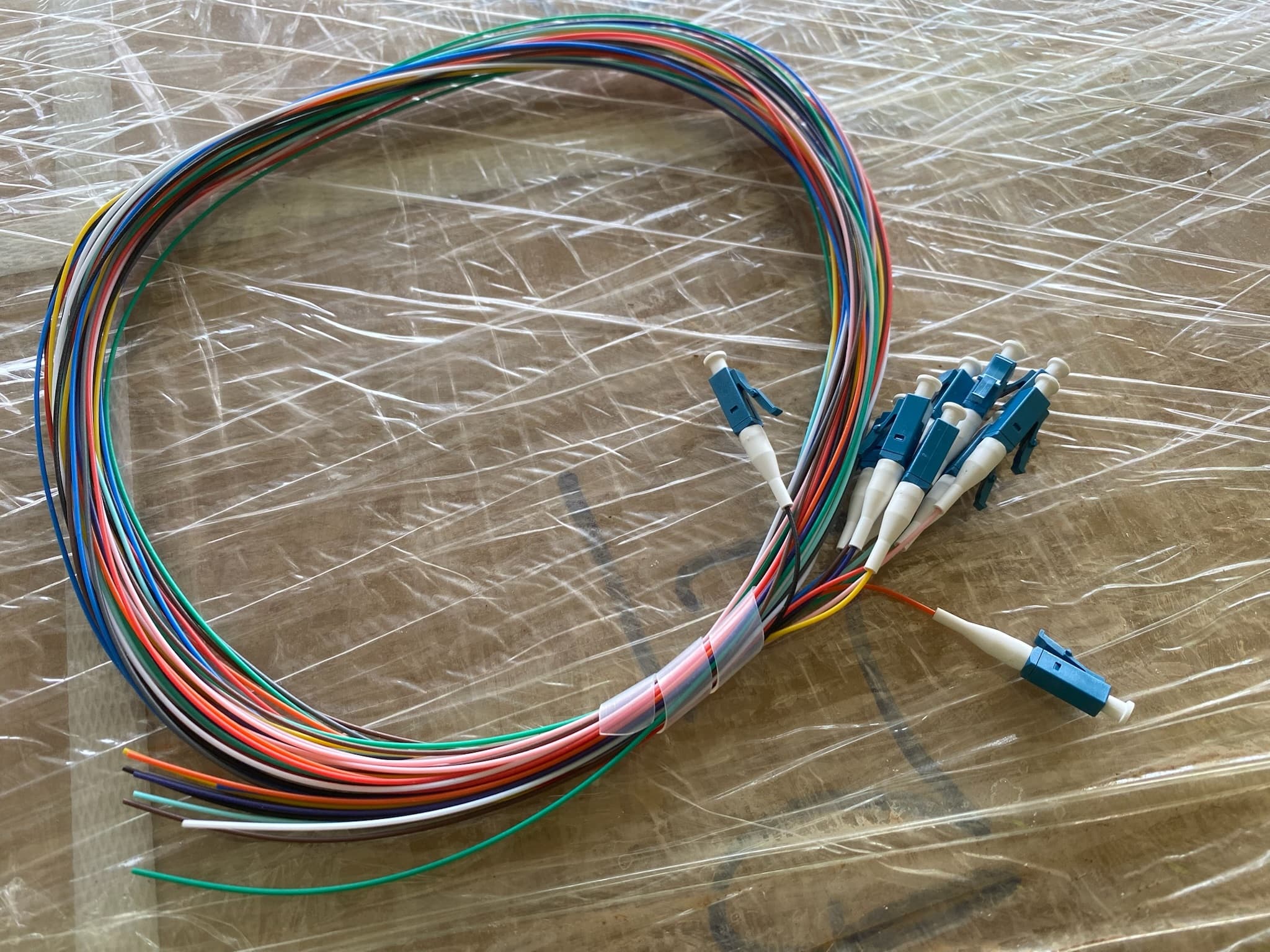
- Fiber continuity and insertion loss testing on all vertical backbone runs with an optical power meter and light source
- UPS load bank testing confirming full-load transfer in under 10ms and battery runtime meeting design specifications
- Biometric turnstile access verification under load — testing simultaneous access events for 150 staff during morning entry without network contention
- VLAN isolation testing confirming no cross-segment traffic leakage between access control, server, and general office networks
- 72-hour burn-in period with continuous monitoring to validate thermal stability in the server room and UPS behavior during simulated utility drops
The Result
Outcome
The campus network now operates on a fully certified Cat6 infrastructure with labeled, documented cabling throughout. The server room maintains stable environmental conditions with automated alerts. UPS protection bridges utility outages without server disruption. Biometric access control operates on an isolated, monitored network segment. Network troubleshooting, previously requiring hours of manual tracing, is now resolved through the monitoring dashboard and documented patch schedule.
Need a Similar Solution?
Talk to an Engineer. Book a free on-site assessment and get a custom infrastructure plan within 48 hours.