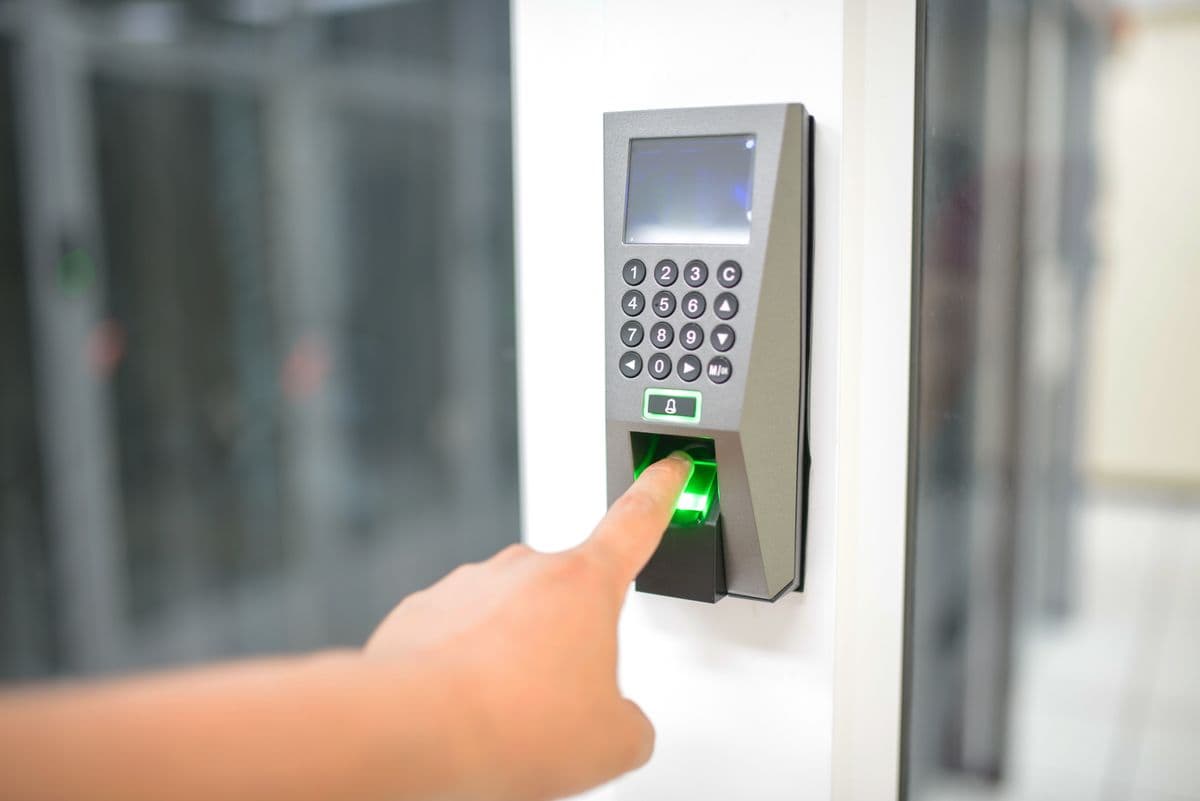
Hardening Security: Isolating Biometric Readers from Public Networks
Plugging office door controllers directly into your general employee network opens up security vulnerabilities. If someone tampers with an exterior reader li...

Typical Office Network Architecture
Typical office network: ISP → Firewall → Core Switch → Access Switches → Endpoints. VLANs separate data, voice, CCTV, POS, and guest traffic.
Plugging office door controllers directly into your general employee network opens up security vulnerabilities. If someone tampers with an exterior reader line, they could gain access to your wider internal systems. Secure network designs isolate all biometric hardware onto a dedicated Virtual Local Area Network (VLAN). This network isolation keeps security traffic separate from general office data, protecting your core systems from unauthorized access..
In Uganda's business environment, where organizations increasingly rely on networked security systems, proper network architecture for biometric access control is fundamental to overall security posture. The interconnection of physical security and network security creates both opportunities and vulnerabilities that require careful management.
This comprehensive guide explores VLAN segmentation strategies for biometric access control systems, providing Ugandan organizations with the technical knowledge and implementation guidance needed to secure their network-connected security infrastructure.
Network Security Fundamentals for Biometric Systems
Understanding how network security interacts with physical security systems is essential for protecting biometric access control infrastructure. The network connectivity that enables advanced security features also creates potential attack vectors that must be addressed through proper architecture and configuration.
Biometric readers and access control panels are network-connected devices that communicate with central management servers, databases, and other security systems. This network connectivity enables features such as centralized management, real-time monitoring, and integration with other business systems. However, this connectivity also means that network vulnerabilities can potentially affect physical security systems.
The attack surface for network-connected biometric systems includes the devices themselves, network communications, management interfaces, and integration points with other systems. Each of these elements requires security attention to prevent unauthorized access or manipulation. For Uganda's organizations, understanding this expanded attack surface is the first step toward effective protection.
Network segmentation provides a foundational security measure that limits the impact of potential breaches. By isolating biometric systems onto dedicated network segments, organizations prevent compromised security devices from providing access to other network resources. This segmentation is a fundamental requirement for secure biometric system deployment.
Security monitoring for network-connected biometric systems requires visibility into both network traffic and device behavior. Anomalous network activity, unauthorized access attempts, and device malfunctions must be detected and responded to promptly. For Uganda's organizations with limited security operations resources, automated monitoring and alerting capabilities are particularly valuable.
VLAN Segmentation Principles and Design
Virtual Local Area Network (VLAN) technology provides logical network segmentation that isolates biometric systems from general network traffic without requiring separate physical infrastructure. Understanding VLAN design principles helps organizations create effective security segmentation.
VLAN segmentation works by assigning network ports and devices to specific broadcast domains, preventing traffic from flowing between segments without explicit routing. For biometric access control systems, dedicated VLANs isolate security traffic from general office data, limiting the impact of potential network compromises.
The design of VLAN architecture for biometric systems should follow the principle of least privilege, allowing only necessary communications between security segments and other network resources. This requires careful planning of routing rules, firewall policies, and access control lists. For Uganda's organizations, this design must balance security with operational requirements.
Physical network design must support VLAN segmentation through appropriate switch configuration and cabling infrastructure. Access layer switches connect biometric devices to dedicated VLANs, while distribution and core switches manage inter-VLAN routing according to security policies. For Uganda's buildings with varying network infrastructure, VLAN implementation may require upgrades to existing network equipment.
Documentation of VLAN configurations, including device assignments, routing rules, and security policies, is essential for ongoing network management. Accurate documentation enables effective troubleshooting, security auditing, and change management. For Uganda's organizations, maintaining current network documentation ensures that security segmentation remains effective over time.
Implementation Strategies for Ugandan Organizations
Implementing VLAN segmentation for biometric access control systems requires systematic planning, execution, and validation. These strategies help Ugandan organizations achieve effective network isolation while minimizing disruption to existing operations.
The implementation process should begin with a comprehensive network assessment that documents existing infrastructure, identifies all biometric devices, and maps current network connectivity. This assessment provides the baseline for designing VLAN architecture and planning implementation activities. For Uganda's organizations with varying levels of network documentation, this assessment may reveal previously unknown devices or connections.
VLAN design should segregate biometric systems into dedicated security VLANs, separate from general office, voice, and guest network segments. For Uganda's organizations, a typical design might include separate VLANs for access control panels, biometric readers, and security management servers, with appropriate routing and firewall rules governing inter-VLAN communication.
Switch configuration requires careful attention to port assignments, VLAN tagging, and trunk configurations. Each biometric device must be connected to an access port assigned to the appropriate security VLAN. Trunk links between switches must carry security VLAN traffic according to design specifications. For Uganda's organizations with multi-building campuses, trunk configurations between buildings require particular attention.
Firewall and routing configuration governs communication between security VLANs and other network segments. These configurations must allow necessary security system communications while blocking unauthorized traffic. For Uganda's organizations, firewall rules must accommodate integration requirements with HR systems, network management platforms, and other authorized systems.
Security Policies and Access Controls
Effective VLAN segmentation requires accompanying security policies that govern network access, device management, and incident response. These policies provide the framework for maintaining network security over time.
Network access policies define which devices and users can connect to biometric system VLANs, and what communications are permitted. These policies should follow the principle of least privilege, allowing only necessary connections and communications. For Uganda's organizations, these policies must accommodate both internal staff and authorized external service providers.
Device management policies govern how biometric devices are configured, maintained, and updated within their isolated network segments. These policies should address firmware updates, configuration changes, and security patching. For Uganda's organizations with limited IT resources, these policies must balance security requirements with practical operational constraints.
Incident response procedures for biometric system network security should define detection, containment, and recovery processes. These procedures should address scenarios such as unauthorized device connections, suspicious network traffic, and potential system compromises. For Uganda's organizations, having documented procedures ensures rapid, effective response to security incidents.
Security monitoring policies define what events are logged, how alerts are generated, and who responds to security notifications. Comprehensive monitoring provides visibility into biometric system network activity, enabling detection of potential security issues. For Uganda's organizations, automated monitoring tools help overcome limited security operations resources.
Integration Security Considerations
Biometric access control systems often require integration with other business systems, creating potential security challenges that must be managed through careful architecture and configuration. Understanding these integration security considerations is essential for maintaining overall system security.
HR system integration connects biometric attendance data with payroll and employee management systems. This integration typically requires secure communication between the security VLAN and HR network segments. For Uganda's organizations, this integration must be implemented with appropriate access controls and encryption to protect sensitive employee data.
Network management integration enables centralized monitoring and management of biometric devices alongside other network infrastructure. This integration must be implemented carefully to prevent management system compromise from affecting biometric system security. For Uganda's organizations, dedicated management VLANs with strict access controls provide appropriate isolation.
Physical security system integration connects biometric access control with video surveillance, intrusion detection, and other security systems. This integration enhances security effectiveness but creates additional communication pathways that must be secured. For Uganda's organizations, security system integration requires careful design to maintain overall security posture.
Cloud service integration for biometric system management and data storage creates additional security considerations. Cloud connectivity must be encrypted and authenticated, with appropriate access controls governing data sharing. For Uganda's organizations using cloud services, these integrations must comply with both local and international data protection requirements.
Common Implementation Mistakes and Avoidance Strategies
Understanding common VLAN segmentation mistakes helps Ugandan organizations avoid issues that compromise network security or create operational difficulties. Learning from others' experiences accelerates successful implementation.
Inadequate VLAN separation represents the most critical mistake, with security devices sharing network segments with general office equipment. This failure defeats the purpose of segmentation, allowing potential compromises to spread between security and business systems. Proper design and implementation ensures complete separation of biometric system traffic.
Insufficient access control lists (ACLs) and firewall rules allow unnecessary communications between security VLANs and other network segments. Each permitted communication pathway represents a potential attack vector that must be justified by operational requirements. For Uganda's organizations, regular review and tightening of access controls maintains effective segmentation.
Poor documentation of VLAN configurations creates management challenges and security risks. Without accurate records of device assignments, routing rules, and security policies, organizations cannot effectively manage or audit their network security. Comprehensive documentation is essential for ongoing security management.
Neglecting ongoing monitoring and maintenance allows security degradation over time. Network changes, device additions, and configuration drift can erode security segmentation if not actively managed. For Uganda's organizations, regular security assessments and monitoring help maintain effective VLAN isolation.
Performance Monitoring and Optimization
Effective VLAN segmentation requires ongoing monitoring and optimization to maintain both security and performance. Performance monitoring ensures that security measures don't create unacceptable bottlenecks while maintaining protection.
Network performance monitoring for biometric system VLANs should track bandwidth utilization, latency, and error rates. These metrics help identify potential issues before they affect security system operation. For Uganda's organizations, automated monitoring tools provide continuous visibility into network performance.
Security performance monitoring tracks the effectiveness of VLAN segmentation through analysis of traffic patterns, access attempts, and security events. This monitoring helps identify potential security issues and validates that segmentation is working as designed. For Uganda's organizations, security information and event management (SIEM) tools provide comprehensive monitoring capabilities.
Optimization activities should address both security and performance requirements. Regular review of VLAN configurations, access controls, and routing rules ensures that security measures remain effective while accommodating operational needs. For Uganda's organizations, periodic security assessments help identify optimization opportunities.
Capacity planning for biometric system VLANs must anticipate future growth in devices, users, and data volumes. Planning for adequate bandwidth, switch capacity, and routing performance prevents future bottlenecks. For Uganda's organizations experiencing growth, proactive capacity planning ensures that network infrastructure supports business expansion.
Conclusion and Implementation Guidance
VLAN segmentation for biometric access control systems provides fundamental network security that protects both physical security infrastructure and broader business networks. The isolation of security traffic prevents potential compromises from spreading while maintaining the connectivity that enables advanced security features.
Successful implementation requires careful planning, systematic execution, and ongoing management. From initial network assessment through VLAN design, implementation, and monitoring, each step must be executed with attention to security best practices and local requirements.
For Ugandan organizations seeking to implement or improve their biometric system network security, professional guidance ensures effective segmentation that balances security with operational practicality. The investment in proper network architecture provides lasting protection for critical security infrastructure.
Backspace IT Services specializes in network security architecture for physical security systems, including VLAN segmentation solutions tailored to Uganda's specific requirements. Our certified network security professionals combine international best practices with deep local expertise to deliver network solutions that protect biometric access control systems while supporting business operations. Contact us today to discuss your biometric system network security needs and discover how our professional services can help secure your physical security infrastructure.
Frequently Asked Questions
What biometric technologies are available for access control?▼
How accurate are biometric access control systems?▼
Can biometric access control integrate with existing security systems?▼
What happens if a biometric reader fails?▼
Are biometric systems compliant with privacy regulations?▼
Continue reading
More articles in Biometric Access Control →