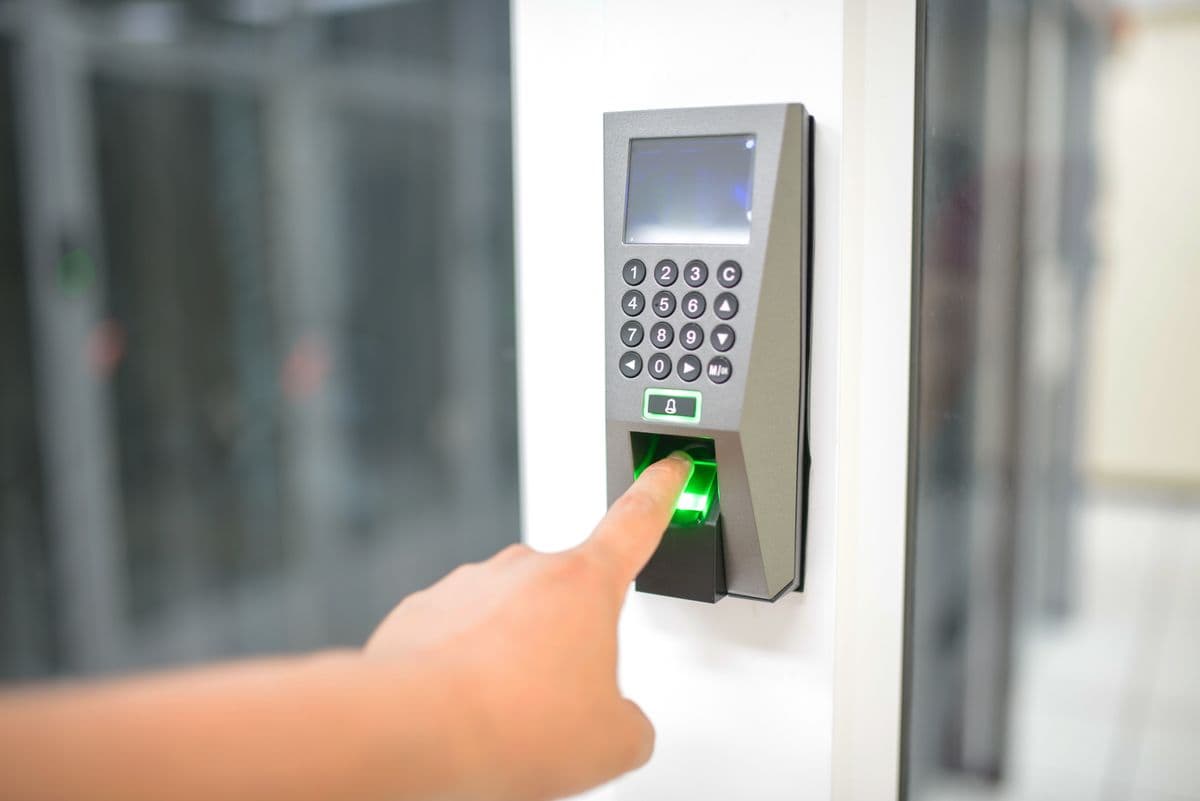
Configuring Smart Magnetic Door Locks for Emergency Egress Safety
Setting up commercial magnetic door locks requires planning for power emergency scenarios to protect both property security and human life: Fail Safe Locking...

Setting up commercial magnetic door locks requires planning for power emergency scenarios to protect both property security and human life:
- Fail-Safe Locking: Releases door magnets automatically the moment system power drops, ensuring clear evacuation paths during emergencies.
- Fail-Secure Locking: Keeps doors locked mechanically even when power fails, protecting high-value spaces like server rooms from unauthorized entry during blackouts.
In Uganda's commercial and industrial environments, where power reliability varies and security requirements differ across building zones, selecting and configuring the appropriate biometric access control systems mode is critical for both safety and security. The choice between fail-safe and fail-secure configurations directly impacts emergency egress, security effectiveness, and regulatory compliance.
This comprehensive guide explores magnetic lock technology, fail-safe and fail-secure configurations, and their applications in Uganda's diverse security environments, providing the knowledge needed to implement door security that protects both property and people.
Magnetic Lock Technology Fundamentals
Electromagnetic locks (maglocks) use electrical current to generate magnetic force that secures doors, with the locking mechanism releasing when power is removed. Understanding maglock fundamentals is essential for selecting and configuring appropriate door security solutions.
The basic magnetic lock consists of an electromagnet mounted on the door frame and a steel armature plate mounted on the door. When electrical current flows through the electromagnet, it generates magnetic force that holds the armature plate, securing the door. Removing current eliminates the magnetic force, allowing the door to open. This fundamental operating principle makes magnetic locks inherently tied to power availability.
Holding force specifications determine the security level provided by magnetic locks. Commercial maglocks typically provide holding forces ranging from 600 to 1,200 pounds (2,700 to 5,400 newtons), with higher forces providing greater resistance to forced entry. For Uganda's commercial buildings, the selection of appropriate holding force depends on security requirements and door characteristics.
Power requirements for magnetic locks typically range from 12V to 24V DC, with power consumption of 3-12 watts depending on lock size and holding force. These relatively modest power requirements make maglocks compatible with various power supply options, including battery backup systems. For Uganda's environments with power quality concerns, understanding power requirements is essential for reliable operation.
The simplicity of magnetic lock technology contributes to its reliability and longevity. With no mechanical moving parts subject to wear, maglocks can provide years of reliable operation with minimal maintenance. For Uganda's commercial buildings, this reliability reduces ongoing maintenance costs and system downtime.
Fail-Safe Configuration: Principles and Applications
Fail-safe magnetic locks release automatically when power is removed, ensuring that doors can be opened during power failures or emergency situations. This configuration prioritizes occupant safety by guaranteeing egress capability regardless of system status.
The fail-safe principle ensures that any power interruption—whether from electrical failure, fire alarm activation, or emergency power shutdown—automatically unlocks controlled doors. This behavior is essential for meeting building safety codes that require free egress during emergencies. For Uganda's commercial buildings, fail-safe configuration ensures compliance with fire safety regulations.
Fail-safe maglocks are required for doors on emergency egress paths, including stairwell doors, exit doors, and corridors leading to exits. Building codes and fire safety regulations typically mandate that these doors release automatically during emergencies to allow unimpeded evacuation. For Uganda's organizations, fail-safe configuration on egress doors is both a safety requirement and legal obligation.
The security limitation of fail-safe configuration is that power failure creates an unlocked condition. In environments where security during power outages is critical, additional security measures may be required. For Uganda's buildings where power reliability varies, this limitation requires careful consideration during system design.
Integration with fire alarm systems enhances fail-safe functionality by triggering door release when fire alarms activate. This integration ensures that fire detection immediately creates evacuation paths, even if power remains available. For Uganda's commercial buildings with fire alarm systems, this integration is essential for comprehensive emergency response.
Fail-Secure Configuration: Principles and Applications
Fail-secure magnetic locks remain locked when power is removed, maintaining security during power failures. This configuration prioritizes property protection by ensuring that doors remain secured regardless of power status.
The fail-secure principle means that power interruption does not affect door security. Doors remain locked until actively released by authorized credentials or manual unlocking. This behavior is essential for securing high-value spaces where security during power outages is critical. For Uganda's data centers and vault rooms, fail-secure configuration maintains protection during power events.
Fail-secure maglocks are appropriate for high-security areas where maintaining lock status during power failures is essential. Server rooms, storage vaults, and sensitive operational areas typically require fail-secure configuration to prevent unauthorized access during emergencies. For Uganda's organizations protecting critical assets, fail-secure configuration provides essential security continuity.
The safety limitation of fail-secure configuration is that doors remain locked during power failures, potentially impeding egress. This limitation requires careful application, with fail-secure locks only installed on doors that are not required for emergency egress. For Uganda's buildings, this requirement necessitates careful planning to ensure both security and safety requirements are met.
Manual override capabilities are essential for fail-secure locks to ensure that authorized personnel can release doors during emergencies. Mechanical key overrides, emergency release buttons, and other manual mechanisms provide egress capability regardless of power status. For Uganda's organizations, properly designed manual overrides balance security with safety requirements.
Hybrid Configurations and Zoned Approaches
Many buildings require both fail-safe and fail-secure configurations in different areas, creating hybrid approaches that address diverse security and safety requirements. Understanding these hybrid approaches helps organizations implement comprehensive door security that meets all requirements.
Zoned security design assigns appropriate lock configurations based on door location and function. Emergency egress paths receive fail-secure locks, while high-security areas receive fail-secure locks. This zoned approach ensures that each door receives the configuration that best balances its security and safety requirements. For Uganda's buildings with diverse security zones, zoned approaches provide tailored solutions.
Conditional release mechanisms add flexibility to fail-secure configurations by allowing controlled release during emergencies while maintaining security during normal operations. These mechanisms can be triggered by fire alarm systems, emergency buttons, or other authorized signals. For Uganda's buildings requiring both security and emergency egress, conditional release provides balanced solutions.
Integration between fail-safe and fail-secure systems requires careful design to ensure coordinated operation during emergencies. Emergency systems must be able to override fail-secure locks on egress paths while maintaining security on other doors. For Uganda's organizations, this integration ensures comprehensive emergency response.
Building code compliance for mixed configurations requires demonstrating that all egress requirements are met while maintaining appropriate security levels. This may require variance approvals, alternative compliance methods, or enhanced safety measures. For Uganda's organizations, working with code officials early in the design process ensures compliance.
Power Supply and Backup Considerations
The power dependency of magnetic locks requires careful attention to power supply design, backup capabilities, and failover mechanisms. Reliable power ensures consistent lock operation while meeting both security and safety requirements.
Primary power supply design must provide adequate voltage and current for all connected magnetic locks while accounting for voltage drop in wiring runs. For Uganda's buildings with varying electrical conditions, power supply design must accommodate voltage fluctuations and potential surges.
Battery backup systems ensure that magnetic locks continue operating during power interruptions. For fail-safe locks, battery backup maintains locking capability until intentional release. For fail-secure locks, battery backup maintains locking capability until authorized release. For Uganda's environments with frequent power fluctuations, adequate battery backup is essential.
Emergency power generators provide extended backup capability for prolonged outages. Generator systems must be sized to support all critical security systems, including magnetic locks, access control panels, and monitoring equipment. For Uganda's organizations requiring continuous security operation, generator backup provides long-term reliability.
Power monitoring and alerting systems provide visibility into power status and potential issues. Monitoring battery charge levels, power quality, and backup system readiness enables proactive maintenance. For Uganda's organizations, power monitoring helps prevent security lapses caused by power-related issues.
Installation Best Practices and Quality Assurance
Proper installation of magnetic locks is essential for achieving both security and safety objectives. Installation quality directly affects lock performance, reliability, and compliance with building codes.
Mounting alignment between the electromagnet and armature plate is critical for achieving specified holding force. Misalignment reduces effective holding force and can create security vulnerabilities. For Uganda's installations, careful alignment during installation ensures optimal performance.
Wiring practices must follow electrical codes and manufacturer specifications. Proper wire sizing, connection methods, and insulation prevent electrical issues that could affect lock operation. For Uganda's buildings, wiring quality is particularly important given varying electrical conditions.
Strike plate and armature installation must provide proper contact surfaces for magnetic lock engagement. Surface preparation, alignment, and fastening affect both holding force and long-term reliability. For Uganda's installations, attention to these details prevents performance degradation over time.
Testing and commissioning procedures verify that installed magnetic locks meet performance requirements and comply with applicable codes. Comprehensive testing includes holding force verification, release mechanism testing, and integration verification. For Uganda's organizations, thorough testing ensures that installed systems meet their intended objectives.
Common Mistakes and Avoidance Strategies
Understanding common magnetic lock installation and configuration mistakes helps Ugandan organizations avoid issues that compromise security or safety. Learning from others' experiences accelerates successful implementation.
Incorrect fail-safe/fail-secure assignment represents perhaps the most critical mistake. Installing fail-secure locks on egress doors creates safety hazards, while installing fail-safe locks on high-security areas creates security vulnerabilities. Careful planning and code review prevents these assignments.
Inadequate power supply sizing leads to voltage drop, insufficient holding force, and unreliable operation. Proper power calculation and wire sizing prevents these issues. For Uganda's installations, accounting for voltage fluctuations ensures reliable operation.
Poor installation alignment reduces holding force and creates security vulnerabilities. Manufacturer installation guidelines must be followed precisely to achieve specified performance. For Uganda's installations, proper alignment prevents performance issues.
Neglecting manual override requirements creates safety hazards during emergencies. All fail-secure locks must have accessible manual release mechanisms. For Uganda's buildings, manual overrides are essential for both safety and code compliance.
Conclusion and Implementation Guidance
Magnetic lock selection and configuration must balance security requirements with safety obligations, creating door security that protects both property and people. The choice between fail-safe and fail-secure configurations depends on door location, security requirements, and building code obligations.
For Uganda's commercial and industrial buildings, proper magnetic lock implementation requires understanding of both security principles and safety requirements. Zoned approaches that assign appropriate configurations based on door function provide comprehensive solutions that address all requirements.
For organizations seeking to implement or upgrade their magnetic lock systems, professional guidance ensures appropriate configuration and installation that meets both security and safety objectives. The investment in properly designed and installed magnetic locks provides reliable door security with appropriate safety provisions.
Backspace IT Services specializes in door security system design and implementation, including magnetic lock solutions that balance security with safety requirements. Our experienced technicians understand both security principles and building code requirements, ensuring installations that protect property while maintaining safe egress. Contact us today to discuss your door security needs and discover how our professional services can help implement magnetic lock solutions that meet your organization's specific requirements.
Frequently Asked Questions
What biometric technologies are available for access control?▼
How accurate are biometric access control systems?▼
Can biometric access control integrate with existing security systems?▼
What happens if a biometric reader fails?▼
Are biometric systems compliant with privacy regulations?▼
Continue reading
More articles in Biometric Access Control →