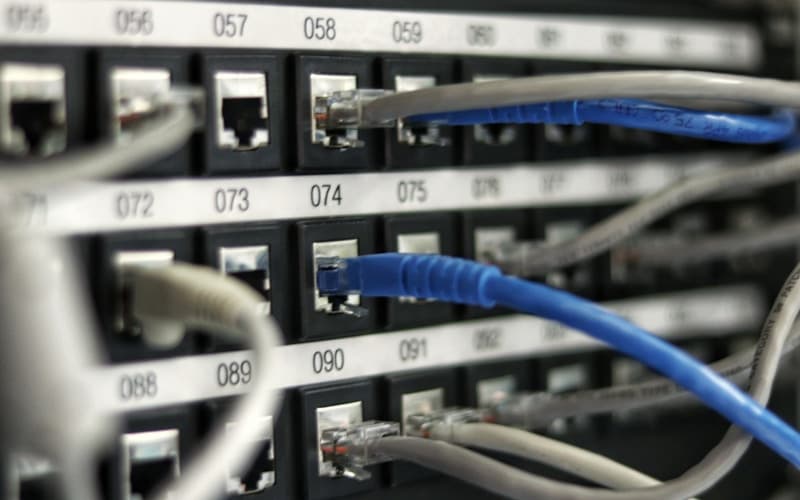
Hidden Cost of Messy Server Racks in Kampala
Discover how unorganized server racks and tangled cabling increase Mean Time to Repair and cost Kampala businesses thousands in downtime every month.

Design considerations
- Disorganized server racks increase Mean Time to Repair (MTTR) from 12 minutes to 3.5 hours—a 17x difference that directly impacts revenue and customer satisfaction.
- A single 6-hour outage caused by messy cabling cost one Kampala logistics company UGX 5.25M—more than double the cost of proper cable management.
- TIA-606-B compliant labeling and structured cable management deliver ROI within one prevented outage for most Ugandan businesses.
When a network loop occurs or an edge switch port fails inside an unmanaged data cabinet, diagnostic engineers cannot trace physical lines efficiently. An emergency task that should take exactly 7 minutes under certified structural labeling standards can stretch into 4 hours of trial-and-error cord pulling.
During this window, internal communication drops, database writes freeze, and client-facing digital interfaces fail. The financial impact accumulates with every passing minute, and the true cost of disorganized infrastructure reveals itself in ways that never appear on a balance sheet.
The immediate productivity loss is only the visible portion of the damage. Behind the scenes, customer transactions fail, orders cannot be processed, emails bounce, and the business's reputation suffers damage that may take months to repair.
Hard Engineering Impact Metrics
Diagnostics Inefficiency
Unlabelled patch setups increase hardware isolation windows by over 300%. When a network fault occurs in a disorganized rack, technicians must physically trace each cable to identify the affected connection. In a rack with 200 unlabeled patch cords, this process can consume hours, during which the network remains degraded or offline.
With proper TIA-606-B labeling, the same identification task takes minutes because the technician can read the label at each end of the cable. The diagnostic inefficiency compounds when multiple faults occur simultaneously—which is common in disorganized environments.
A single switch failure in a tangled rack can generate 5-10 secondary faults as disturbed cables lose connection. The MTTR in disorganized racks averages 3.5 hours compared to 12 minutes in properly structured environments. This represents a 17x increase in downtime duration that directly impacts business revenue.
Thermal Stress Hazards
Disorganized cable masses trailing behind active switch intake fans choke essential air currents, creating isolated heat pockets that degrade critical core processor chips. When cables block equipment ventilation openings, components run hotter, reducing their operational lifespan.
In Kampala's tropical climate, where ambient temperatures regularly exceed 30°C, the additional thermal stress from cable obstructions accelerates equipment degradation exponentially. According to ASHRAE guidelines, every 10°C increase above recommended maximum reduces electronic component reliability by 50%.
Physical Disconnection Risks
Tracing an unmarked line by hand often leads to accidental partial disconnections of nearby functional lines. A technician pulling on one cable to trace it may disturb adjacent cables, creating additional faults that compound the original problem. This cascading failure mode is a direct consequence of cable disorganization.
The Solution and Implementation Framework
By modernizing data infrastructure with custom horizontal managers, matching patch cords, and systematic ANSI/TIA-606-B identification schemes, troubleshooting drops to single-digit minutes. The investment in cable management hardware and labeling is minimal compared to the cost of extended downtime.
Cable Management Components
| Component | Function | Price Range (UGX) |
|---|---|---|
| Horizontal managers (1U/2U) | Route patch cords across rack face | 150,000 - 400,000 |
| Vertical managers | Route cables along rack sides | 200,000 - 600,000 |
| Velcro straps/ties | Secure cables at intervals | 50,000 - 150,000 |
| TIA-606-B labels | Identify cables at both ends | 100,000 - 300,000 |
Each component should be sized to accommodate current cable volumes plus 30-40% growth capacity.
Quantifying the Financial Impact
Productivity Loss
For a Kampala business with 50 employees, each earning an average of UGX 2,000,000 per month, one hour of network downtime costs approximately UGX 125,000 in lost productivity alone. Over a year, businesses experiencing monthly outages lose UGX 1.5M+ in productivity.
Case Study: Kampala Logistics Company
A Kampala logistics company experienced a network outage that lasted 6 hours due to a switch failure in a disorganized server rack:
| Cost Component | Amount (UGX) |
|---|---|
| Direct productivity loss | 750,000 |
| Rerouting trucks and rescheduling deliveries | 3,000,000 |
| Customer penalties for late deliveries | 1,500,000 |
| Total cost of single outage | 5,250,000 |
The cost of properly organizing the rack would have been approximately UGX 2,000,000—less than half the cost of one preventable outage.
Secondary Costs
Replacement equipment costs increase when technicians damage adjacent cables during emergency troubleshooting. Overtime labor costs escalate when problems persist beyond normal working hours. Customer compensation costs arise when service level agreements are violated due to preventable outages. These secondary costs often exceed the primary productivity loss.
Prevention Strategies and Implementation Framework
Step 1: Comprehensive Audit
The first step is conducting a comprehensive audit of the current infrastructure. This audit documents the number of cables, their routing, labeling status, and the condition of existing cable management hardware. Professional auditors use standardized checklists aligned with TIA-568 and TIA-606-B standards.
Step 2: Hardware Installation
Cable management hardware should be selected based on the specific requirements of each rack. Horizontal managers in 1U or 2U configurations handle patch cord routing. Vertical managers route cables from horizontal positions to distribution pathways. Velcro straps or cable ties secure cables at regular intervals.
Step 3: Labeling Implementation
Labeling follows the ANSI/TIA-606-B standard, which defines label formats, content, and placement. Every cable should be labeled at both ends within 150mm of the termination point. Labels should include cable identifier, source location, destination location, and installation date.
In Kampala, where humidity can degrade label adhesive, using laminated or heat-shrink labels ensures long-term readability and durability.
Step 4: Documentation
Maintain a digital cable management database that tracks cable routes, certification test results, installation dates, and maintenance history. Documentation should be updated immediately after any infrastructure change through a formal change management process.
Building a Culture of Infrastructure Discipline
Technical solutions alone cannot solve the problem of messy server racks. The underlying cause is often a culture that treats cable management as optional or unimportant. Changing this culture requires leadership commitment, clear policies, and accountability.
Cable Change Management Policy
The policy should require that all changes follow established cable routing paths, use appropriate management hardware, include proper labeling, and are documented in the cable management database. Exceptions for emergency changes should be limited and require subsequent remediation.
Regular Infrastructure Audits
- Monthly visual inspections catch obvious issues like unplanned cable additions
- Quarterly comprehensive audits verify labeling accuracy and compliance
- Annual certification testing validates infrastructure performance against standards
Conclusion and Next Steps
The hidden costs of messy server racks include extended downtime, increased repair times, thermal degradation, and cascading failures. These represent a significant and preventable drain on business resources.
For Kampala businesses, where network reliability directly impacts revenue, customer satisfaction, and competitive position, the investment in cable management infrastructure is a business necessity.
Contact Backspace Business Solutions for a free on-site network audit. Our certified technicians will assess your infrastructure, quantify the risks, and recommend specific improvements that deliver measurable returns.
Request Free Site Survey to transform your server room from a liability into a reliable asset.
Frequently Asked Questions
What is structured cabling and why is it important for businesses?▼
How long does a structured cabling installation take?▼
What cable categories should I use for my office network?▼
How often should structured cabling be inspected?▼
Can structured cabling support both data and voice applications?▼
Continue reading
More articles in Structured Cabling →